🦓 Ethereum Zebra (Fusaka) Upgrade: Your Phone Becomes a Hardware Wallet — And You Still Want L2 to Be Even Cheaper?

GM,
Ethereum has upgraded again. Around 6 a.m. Taiwan time on December 4 (today), Ethereum completed its second system upgrade of 2025, codenamed Fusaka (a blend of Fulu and Osaka). This upgrade includes 12 updates in total, but the two most important changes are:
- Improving wallet user experience
- Significantly reducing L2 transaction fees
Let’s start with this upgrade’s mascot—the zebra.
The Zebra Upgrade 🦓
In 2022, Ethereum’s Merge 1 upgrade transitioned its consensus mechanism from Proof of Work (PoW) to Proof of Stake (PoS), officially marking the end of the “mining with computing power” era. From that day on, people no longer needed to raid electronics malls for GPUs. Simply staking ETH was enough to earn around 3% annual “mining” rewards.
But the “Merge” sounds very abstract, and most people still cannot clearly explain what exactly was “merged.” So someone created a meme: two bears, one black and one white, performing the Dragon Ball fusion pose, ultimately combining into a black-and-white panda. That panda symbolizes Ethereum after the Merge.
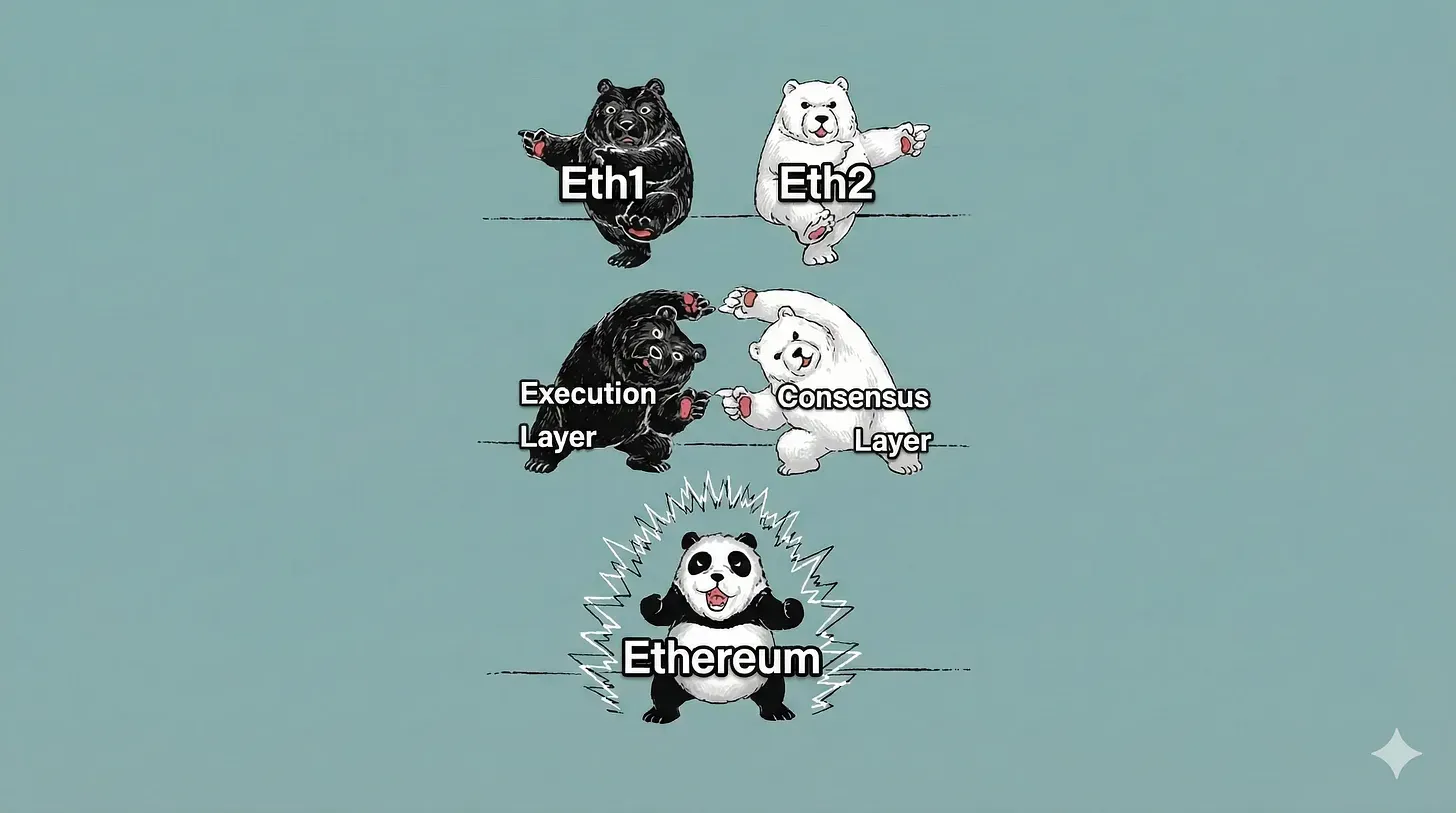
This meme wasn’t just popular among the community— even the Ethereum Foundation frequently used it in their promotions. It’s easier to understand than any technical explanation, and the panda accidentally became the mascot of the Merge upgrade. The Fusaka upgrade carries a similar creative touch. In its documentation, Ethereum also designated a mascot—this time, the zebra:
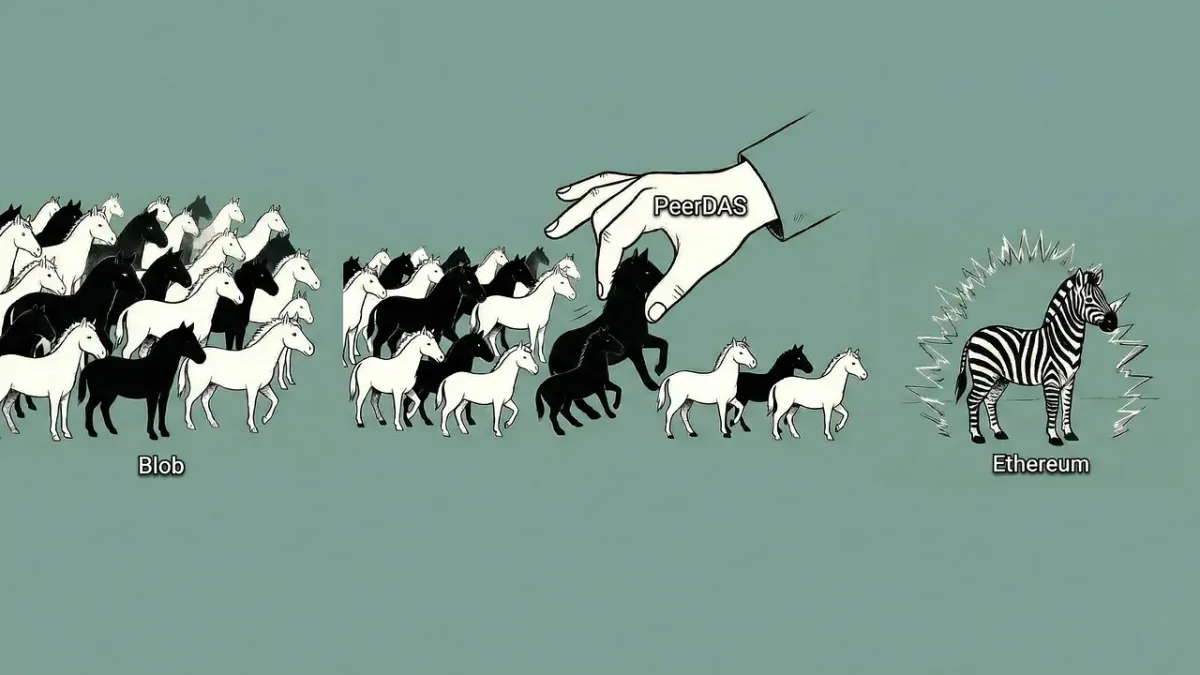
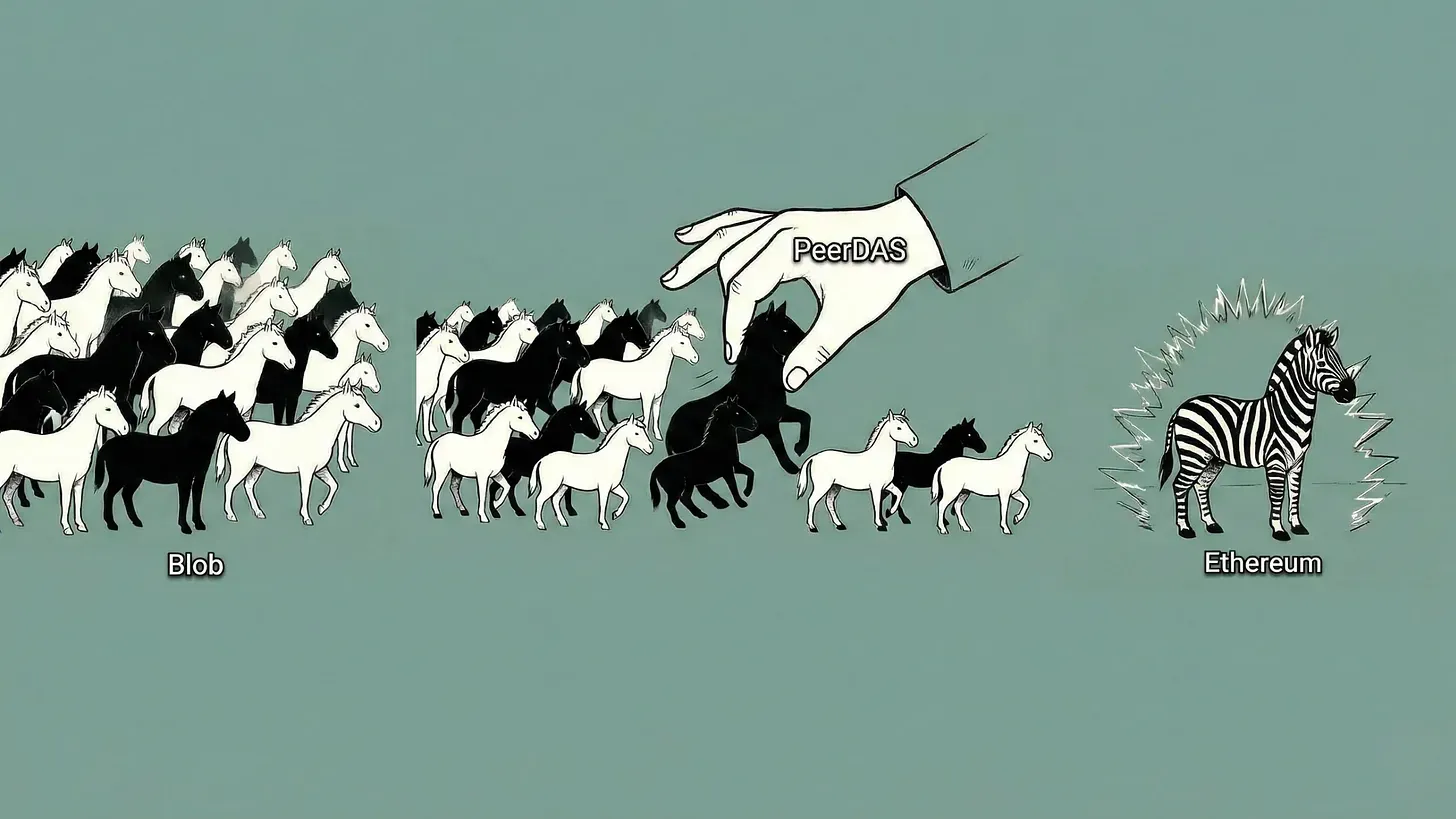
The zebra was chosen by Fusaka developers as the ‘mascot’ because its stripes symbolize PeerDAS’s column-based data-availability sampling. Nodes will store certain column subnets and sample a few additional columns from each peer’s slot to check whether blob data is available.
Hmm… not understanding it is perfectly normal 😂 Inspired by the panda meme, I made one for the “Zebra Upgrade” as well. While PeerDAS’s sampling mechanism is indeed a key focus of this upgrade, the change users will feel the most is the ability for your phone to transform into a hardware wallet.
Turning Your Phone Into a Hardware Wallet
Have you ever bought a hardware wallet? Crypto is convenient—so convenient that it becomes easier to lose. That’s why people are willing to pay for “inconvenience”: isolating wallet private keys from daily life to prevent hackers from breaking in. But some people hide their keys so well that even they can’t find them in the end 😂 Is there a way to balance both security and convenience? Developers turned their attention to smartphones.
Whether you’re using an iPhone or Android, your phone contains a dedicated secure chip. It’s the hardest part of the device to compromise—a fortress storing your FaceID, fingerprints, and mobile payment keys, equipped with physical-tamper protection and offering a security level even higher than hardware wallets. If wallet private keys could be stored in this chip as well, you would theoretically get both security and peace of mind without losing them.
The problem is that the cryptographic signature mechanisms built into phones are incompatible with Bitcoin and Ethereum. So even though smartphones already have hardware-wallet-grade secure chips, users haven’t been able to sign blockchain transactions directly with them. Both sides have been waiting for the other to extend an olive branch. With the Zebra Upgrade, Ethereum developers finally took the initiative to “move toward smartphones,” adding native support for the signature standard used by billions of devices worldwide—instantly transforming phones into hardware wallets.
In the coming months, we can expect more and more wallet apps to support creating wallets “with your face or fingerprint.” Private keys (passkeys) will be stored directly inside your phone’s secure chip, safeguarded by Apple, Google, and security experts around the world. But this doesn’t mean dedicated hardware wallets like Ledger and Trezor are suddenly out of business. After all, the upgrade only applies to Ethereum—Bitcoin still has to be secured the old-fashioned way.
Of course, mobile signing isn’t risk-free. Without backups, losing or breaking your phone could make your assets unrecoverable. In addition, mobile private keys currently cannot be “ported” the way mnemonic phrases can. A private key (passkey) created in Trust Wallet, for example, cannot yet be transferred to Base Wallet. It’s like being locked into whichever wallet app you used. If the app disappears one day, retrieving your assets becomes a hassle.
In extreme scenarios, new technology can feel fragile. But in everyday usage, it allows users who get dizzy just looking at mnemonic phrases to finally cross the barrier and get started.
Besides usability, people care most about one thing: transaction fees.
The second major highlight of the Zebra Upgrade is making Ethereum L2s—already cheap—even cheaper.
How Much Cheaper Can L2 Get?
So, how much does it cost right now to send a USDT transaction on Ethereum mainnet?
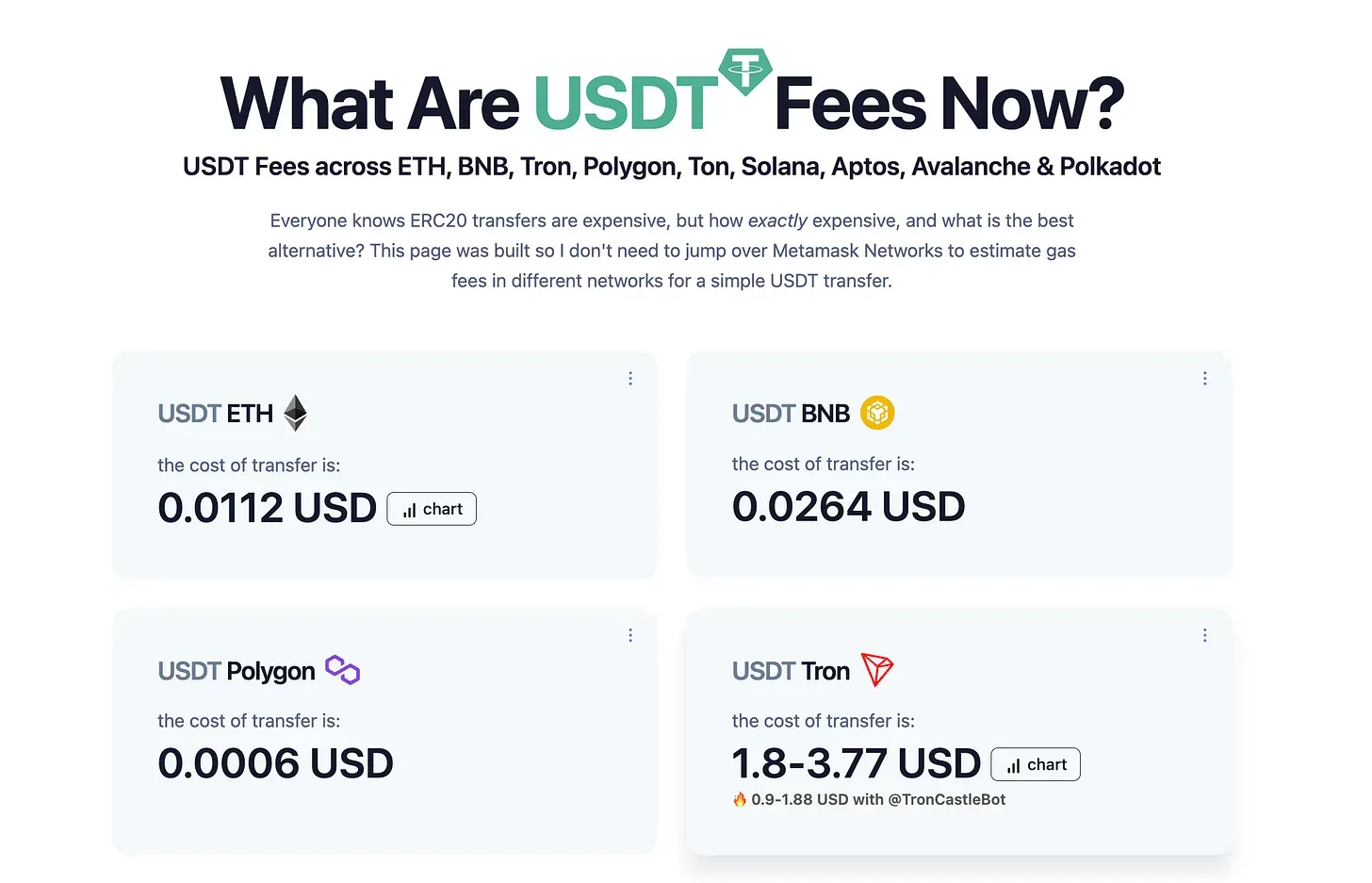
Many people still hold memories from the early days, assuming that on-chain transfers are expensive and require spending tens of dollars’ worth of ETH. But at the time I’m writing this article, even more complex cross-chain transactions cost only about $0.01 USD, roughly NT$0.3. If that’s the price on Ethereum mainnet, L2s are even cheaper.
At this point, some people will continue relying on old impressions (or imagination) and say: “See? Crypto is cheap only because nobody uses it.”
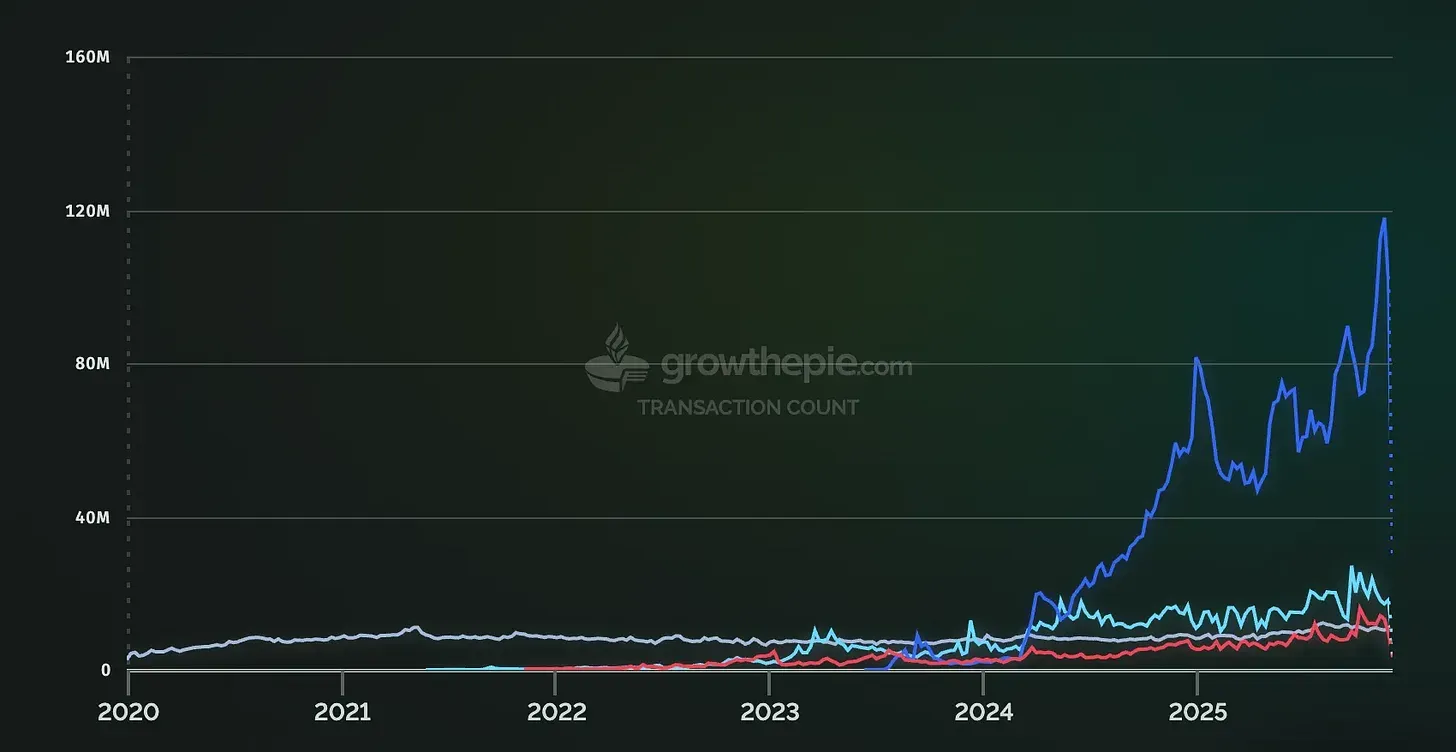
But objective data shows on-chain activity has been steadily increasing. Ethereum L2s—especially driven by Coinbase’s Base chain (blue line in the chart below)—have grown massively over the past two years, to the point where they’re close to overwhelming blockchain capacity. That’s why the top priority of this upgrade is to scale Ethereum without compromising decentralization.
Improving efficiency is easy, but maintaining decentralization at the same time is extremely difficult. It’s like how making a decision alone is simple, but building consensus among a group is hard. Ethereum has thousands of nodes around the world, and every performance upgrade is like a magic show—nothing appears to change on the surface, but behind the scenes, massive engineering work takes place.
Take this upgrade as an example. Since on-chain transactions are approaching full capacity, the most intuitive solution would be to “increase the space (blob)” so the blockchain can process more transactions at once. The problem is that Ethereum nodes are distributed globally, and not every country has internet speeds as fast and stable as Taiwan’s. Increasing the “data space” forces nodes to download more data from the chain within the same amount of time. Those who can’t keep up will drop out. Fewer participating nodes means more centralization. In the extreme, Ethereum could become a “data-center chain” run only by large corporations.
Balancing efficiency and decentralization is, by nature, an unreasonable demand—wanting the horse to run fast without eating more grass. And yet, researchers always manage to invent new tricks to make the horse eat less but run faster. This time, their answer is sampling. Nodes no longer need to download all data; they can download only a portion and use sampling to verify the rest. The actual mechanism is far more complex than customs selectively inspecting goods, but the core idea is the same: increase transaction capacity without increasing the burden on nodes.
This is also why developers chose the zebra as the mascot for this upgrade—because the zebra’s stripes resemble individual sampled data columns (a bit of a stretch 😂).
At the start of 2024 2, developers hypothesized that gas fees were preventing enterprises from adopting blockchain. Lowering Ethereum’s usage cost would encourage more companies to bring applications on-chain. Over the past year, the significant growth in on-chain activity has proven this direction correct. This upgrade builds on that foundation, making L2 fees even cheaper.
At the time I’m writing, Ethereum is still a few hours away from completing the upgrade. Barring any surprises, this will be the second system upgrade Ethereum has completed within a year. Even if not every upgrade is noticeable to users, the process works like a “disaster drill”—it ensures Ethereum can react more flexibly when facing sudden threats like quantum computers 3.
1 Ethereum Merge: Upgrade Roadmap and the Miners’ Meaningless Fork