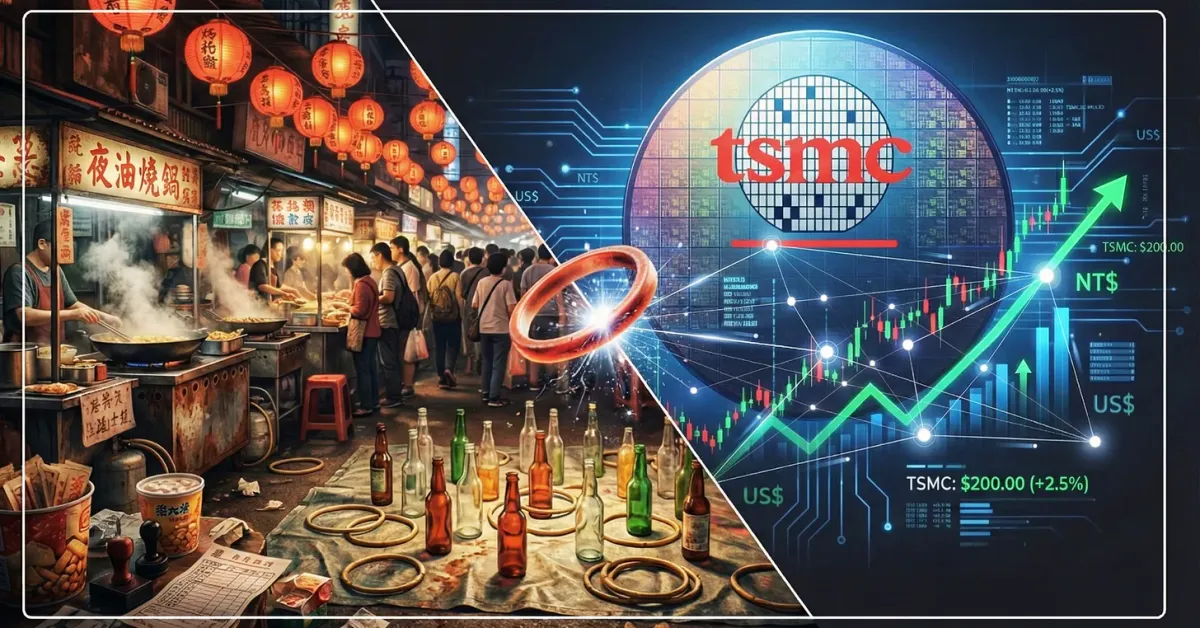
Congratulations on "tossing" your way into TSMC! The tokenization opportunity that everyone from night markets to Wall Street is clamoring for (Leave a comment for a chance to win TSMon)

GM,
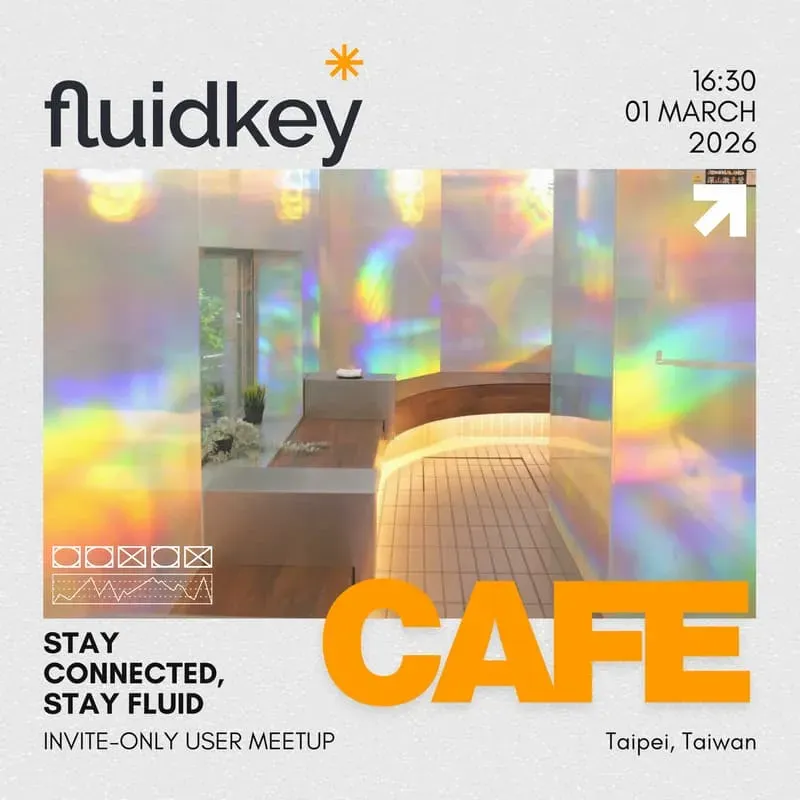
This Sunday evening (3/1), Fluidkey will be hosting its first in-person event in Taipei. Founder Moritz will be flying to Taiwan to attend in person. In addition to hands-on product demos, he will also share insights into Fluidkey’s future roadmap. I’ll be there for the entire event as well. The event is invitation-only with limited seats available. Members who are interested are welcome to click the image below to register.
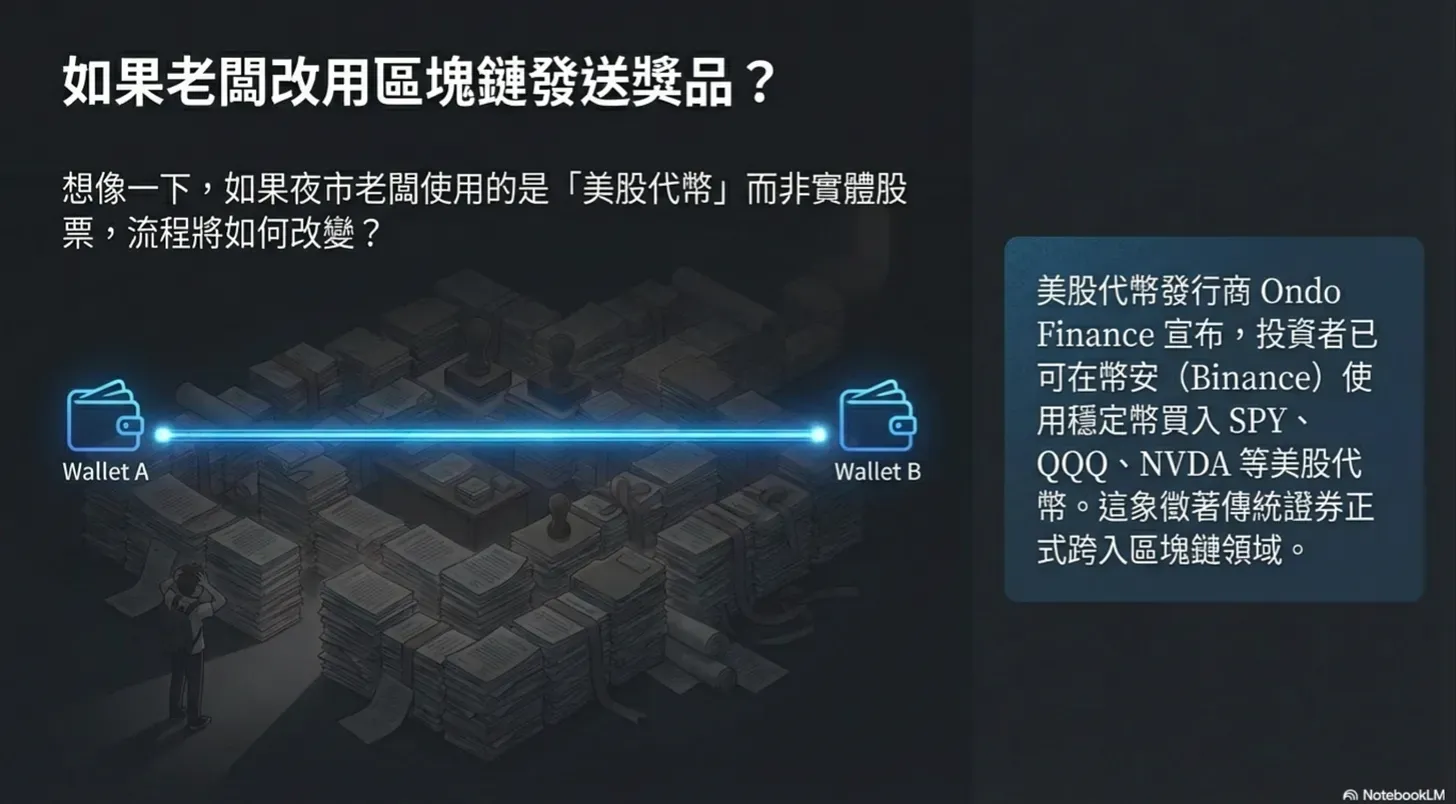
Ondo Finance, an issuer of tokenized US stocks, announced this week that investors can now use stablecoins on the Binance exchange to purchase various tokenized assets, including SPY, QQQ, and NVDA. Just yesterday, I also took the plunge and used the decentralized exchange 1inch to buy my first TSMon (tokenized TSMC) tokens to see what the buzz is about.
I’ll share my firsthand experience. But first, let’s start with a classic night market game: the ring toss.
The Night Market Ring Toss
During the Lunar New Year this year, the most popular activity wasn't buying lottery tickets—it was the ring toss.
Over the holiday, a high school student at a night market in Kaohsiung successfully tossed a ring onto the grand prize: 100 shares of TSMC. With TSMC’s stock price hitting consecutive all-time highs and officially breaking the $2,000 TWDmark yesterday, those 100 shares are now worth nearly $200,000 TWD.
After the news broke, a netizen took to the Dcard forum to ask the burning question: "If you win 100 shares of TSMC at a night market ring toss, how exactly do you handle the ownership transfer?"
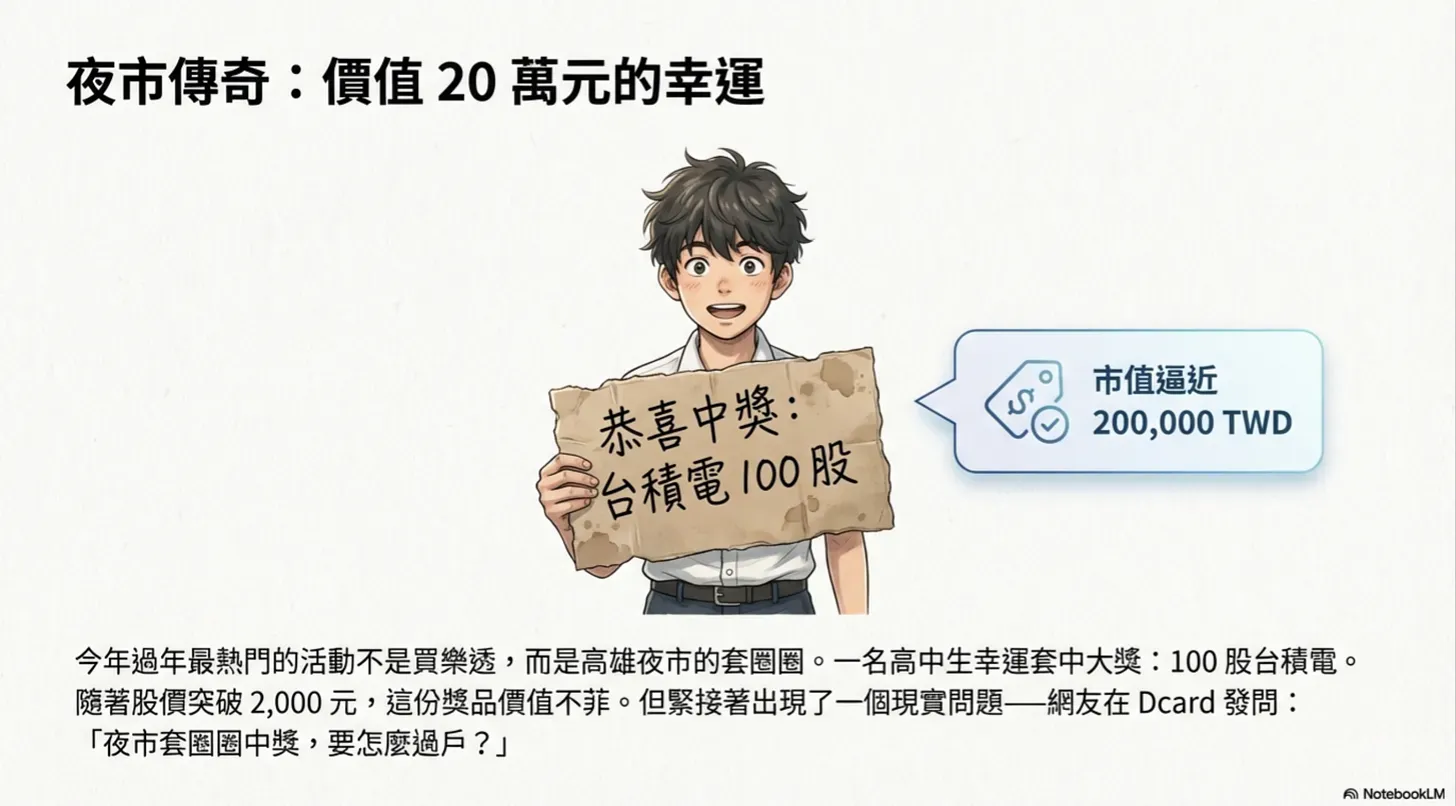
Most people speculated that the prize would likely be paid out in equivalent cash; some even doubted whether giving away actual shares was even feasible. However, when interviewed, the stall owner stated clearly that he would meet with the high school student at a brokerage after the holidays to handle the transfer (he seemed quite experienced at this 😂). It’s evident that most people aren't aware that stocks can indeed be gifted—it's just that the process is far more cumbersome than a cash transaction.
The stall owner must first apply for a tax payment (or exemption) certificate from the tax authorities. If the high school student is a minor, they must be accompanied by their parents and bring their ID cards and official seals to the brokerage to fill out a transfer application. The brokerage then submits the documents to the Taiwan Depository & Clearing Corporation (TDCC) to complete the ledger update.
I happen to have firsthand experience with gifting assets recently. Just applying for the tax certificate at the National Taxation Bureau takes 3 to 5 business days. The time required to complete the stock transfer depends on the administrative workflows of the brokerage and the TDCC. Even if everything goes smoothly, it still takes about a week. Every step also involves corresponding processing fees. If the transfer amount is too small, it might not even be worth the effort.
However, if the stall owner—perhaps next time?—chose to complete the gift using US stock tokens on the blockchain, the process would be entirely different.
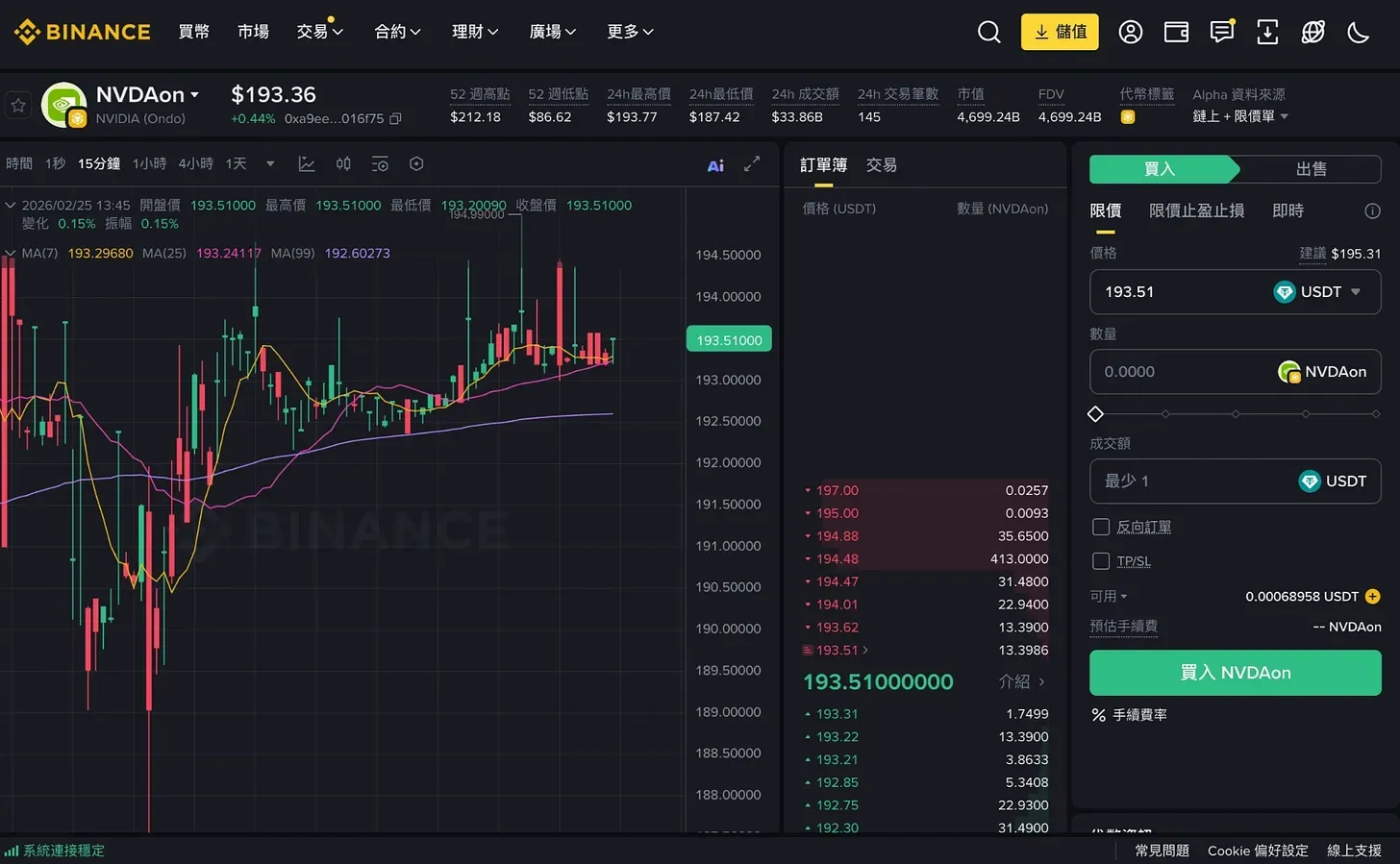
US Stocks Listed on Binance
According to a press release from Ondo Finance:
Ondo's US stock tokens have officially launched on the Binance exchange. This marks a significant milestone in the global liquidity expansion of tokenized US equities and symbolizes the transition of traditional securities onto the blockchain. Currently, the first batch includes 10 assets: AAPLon, GOOGLon, TSLAon, NVDAon, QQQon, CRCLon, METAon, AMZNon, SPYon, and MSFTon.
Surprisingly, TSMC isn't on the list— not knowing the market!
As I’ve written previously in Blocktrend 1, Ondo Finance’s model for issuing US stock tokens is quite unique. The reason their tokens can closely track prices on the Nasdaq and NYSE is due to their "instant minting and redemption" mechanism. When there is buying or selling demand on the blockchain, Ondo simultaneously places orders through traditional brokerages and mints or burns an equivalent amount of tokens on-chain.
Put simply, Ondo bridges the liquidity of traditional brokerages over to the blockchain. Even if initial demand for these tokens is low, the price won't decouple from the actual market.
The image below shows the trading interface for the Nvidia token (NVDAon). Users can purchase it directly using USDCor USDT, or withdraw the tokens to a personal wallet. The entire process and operation are identical to any other cryptocurrency. On-chain transfers are completed within seconds, and withdrawal fees are so low they are practically negligible. This makes tokenized assets the perfect solution for scenarios like gifting stocks at a night market.
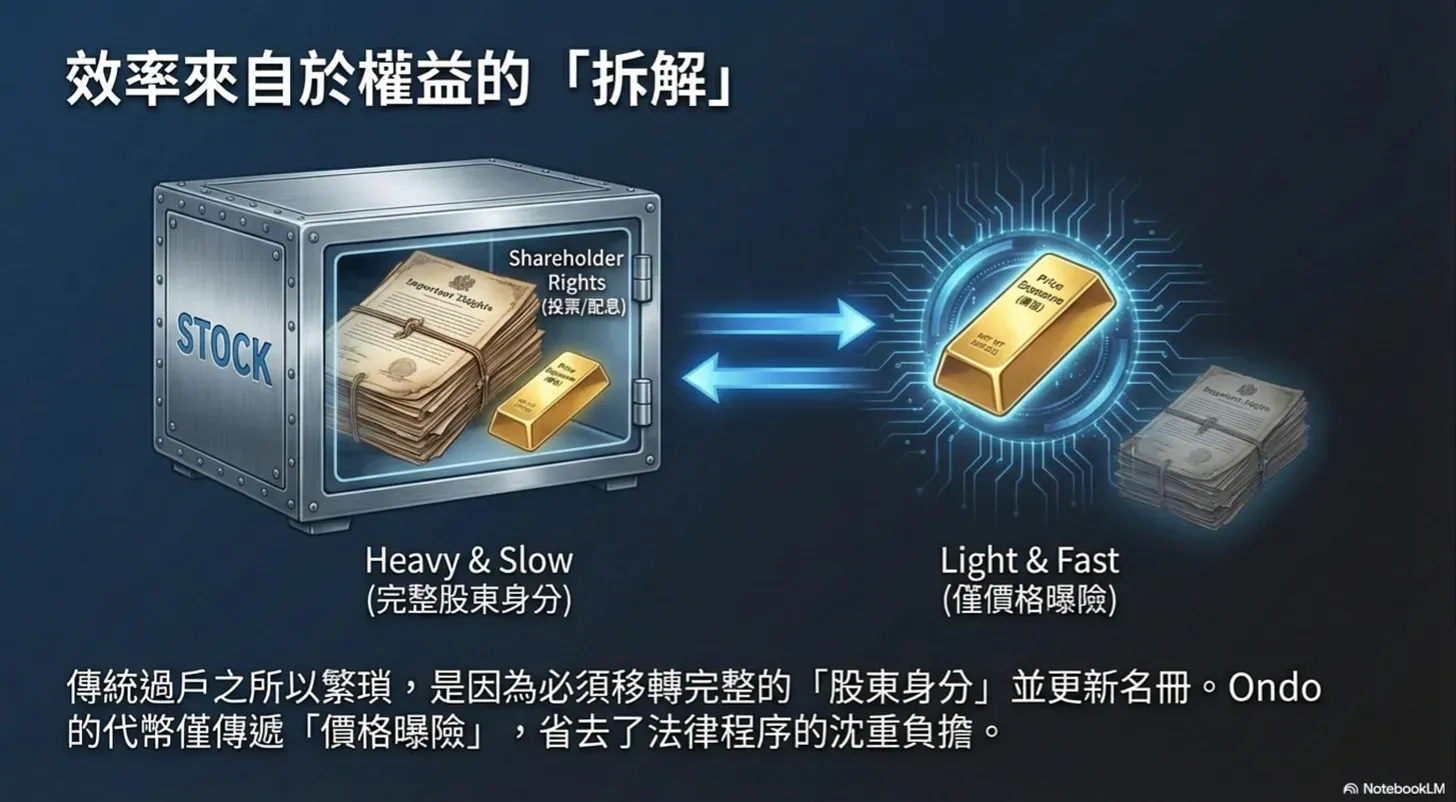
The reason traditional stock transfers are so cumbersome is that they transfer more than just market value—they transfer full shareholder rights. Every transfer requires an update to the shareholder register to ensure that the high school student can vote at TSMC’s shareholder meetings and regularly receive dividends. But in this case, it’s like using a cannon to shoot a bird.
Does that student truly care about raising his hand to vote at a shareholder meeting? With only 100 shares, he has zero impact on corporate governance. What he cares about is the $200,000 TWD in market value.
Unfortunately, the only legal and viable way to transfer stocks right now is this heavy-handed process. Consequently, even though many businesses know that "giving away TSMC stock" is a huge draw for customers, the administrative burden is so high that even large retail chains only dare to offer a few slots for such prizes. Otherwise, they would be buried under the paperwork of processing the transfers.
Innovation in Stock Tokens
The reason Ondo’s stock token transfers are cheap and fast isn't primarily due to technical innovation, but because the actual rights being transferred are "incomplete."
Token holders do not hold official shareholder status; they only have price exposure. By bypassing the legal procedures of updating shareholder registries and transferring formal rights, the process naturally becomes much leaner. Of course, critics will argue that stock tokens are only efficient because they lack regulation and shareholder protections.
While Ondo claims they have designed risk isolation into their structure to ensure that tokens won't go to zero even if the company faces issues, I believe this mechanism still needs to be tested by the market—and perhaps survive a few industry collapses—before we know for sure.
Nevertheless, stock tokens open up a new possibility by decoupling "shareholder identity" from "stock price." When transferring stock no longer necessitates a full transfer of shareholder rights, stocks have the chance to leave the confines of brokerage accounts and integrate into daily life. Some might argue that stocks are serious investment tools and shouldn't be turned into marketing giveaways. But let’s be honest: most people invest in stocks for the returns, not to participate in corporate governance, right?
To give everyone a chance to experience this firsthand, I’ve decided to give away some TSMC "stock." Simply leave a comment below with your thoughts on this topic, and I will randomly select three winners to receive $10 USD worth of TSMon (tokenized TSMC) each. Just a heads-up: remember, you aren't a TSMC shareholder!